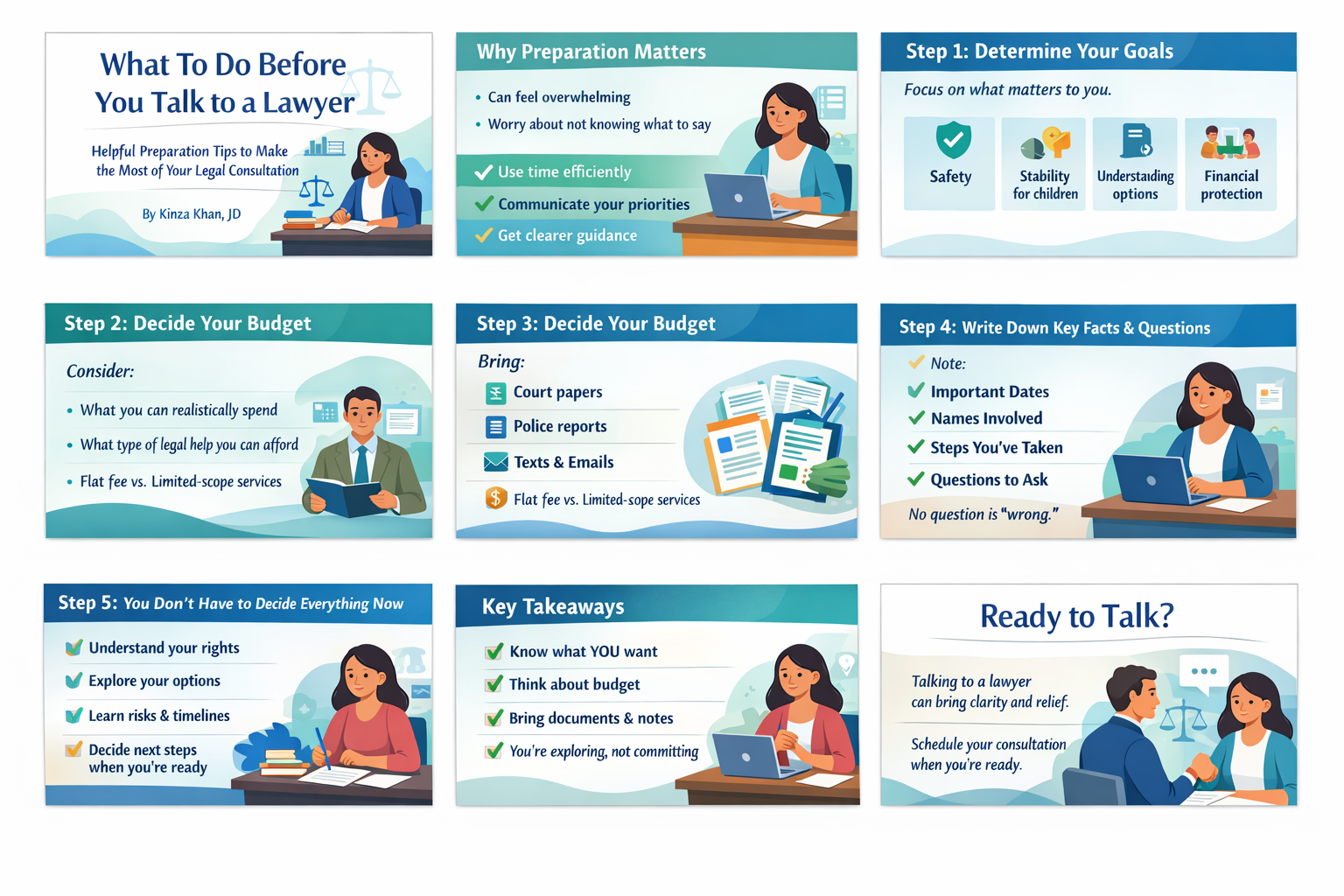
What To Do Before You Talk to a Lawyer
Reaching out to a lawyer can feel overwhelming, especially if you’re dealing with conflict, uncertainty, or a stressful life transition. Many people worry about saying the “wrong” thing, not having enough information, or not knowing what to ask.
The truth is: you don’t need to have everything figured out before speaking to a lawyer. But a little preparation can help you make the most of your time, feel more confident, and get clearer guidance.
Here are a few helpful steps to take before your first conversation with a lawyer.
1. Determine Your Goal(s) - Even If They’re Not Legal or Specific
You do not need to come to a lawyer with perfectly defined or legally worded goals. Many people don’t know what the law allows, or even what options exist, and that’s completely okay.
Sometimes, your “goal” may be as simple as:
“I want to feel safe.”
“I want stability for my children.”
“I want to do this as amicably as possible.”
“I want to understand my options.”
“I want to protect myself financially.”
That is enough.
Other times, you may have a more concrete outcome in mind, such as:
“I want child support payments.”
“I want my landlord to give me more time to move out.”
“I want a divorce, but I don’t want things to escalate.”
“I want an order of protection.”
“I want to make a police report.”
What matters most is knowing your priorities, even if the path forward isn’t clear yet. A lawyer’s role is to help translate your concerns, values, and priorities into legal options… and sometimes to help you clarify what matters most as you go.
2. Decide Your Budget
Legal services are an investment, and it’s okay to have limits.
Before your consultation, think about:
How much can I realistically spend on legal help?
Can I afford a flat fee? A monthly payment? A limited-scope service?
Do I need help understanding lower-cost or phased options?
You don’t need to apologize for budget constraints. Being upfront allows your lawyer to help you explore realistic and respectful options. Even if you cannot afford full representation, there are options for limited scope services.
3. Gather Relevant Documents
You don’t need a perfectly organized folder (thought it does help), but having key documents ready can save time and help your lawyer give more accurate advice.
Helpful documents may include:
Court papers or notices
Police or incident reports
Text messages, emails, or voicemails
Leases, contracts, or agreements
Financial records
Photos, receipts, or screenshots
If you’re unsure what matters, include everything you have. Your lawyer can help sort through what’s relevant.
4. Write Down Key Facts and Questions
Consultations can feel fast - especially when emotions are involved. Writing things down ahead of time can help you stay focused.
Consider noting:
Important dates
Names of people involved
Prior legal steps taken
Questions you don’t want to forget
There are no “wrong” questions. If something is confusing, it’s worth asking. Lawyers have heard it all - trust me.
5. Remember: You Don’t Have to Decide Everything at Once
Talking to a lawyer does not mean you’re committing to immediate legal action.
Often, an initial consultation is about:
Understanding your rights
Learning what options exist
Identifying risks and timelines
Deciding next steps, if and when you’re ready
You are allowed to take time. You are allowed to move at a pace that feels safe.
Ready to Talk?
Let’s Take the First Step Together
Many clients have shared that simply learning about their rights and options lifted an emotional weight they had been carrying - even before making any decisions. Knowing where you stand legally can bring clarity, relief, and a sense of empowerment during an otherwise uncertain time.
If you’re feeling overwhelmed, unsure, or just need clear and compassionate guidance, I invite you to schedule a consultation.
Book a consultation to better understand your rights, explore your options, and decide what next steps - if any- feel right for you.
Clarity is powerful. You don’t have to face this alone.